

Choosing a heavy duty caster is not simply a matter of finding a wheel with a load rating higher than the weight of your equipment.
In a real industrial application, caster performance depends on the interaction between load capacity, load distribution, wheel diameter, wheel material, floor condition, travel speed, shock loading, rolling resistance, caster configuration, mounting structure, bearings, temperature, chemicals and duty cycle.
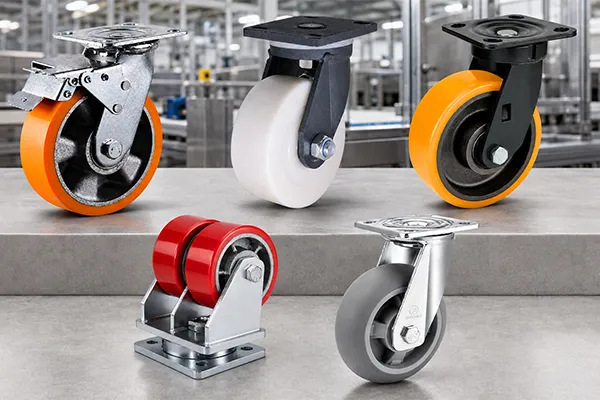
A caster that performs reliably under a slowly moving workshop cart may fail prematurely when the same nominal load is moved by a powered tug across expansion joints. Likewise, an extremely hard wheel may offer excellent load capacity and low rolling resistance while creating unacceptable noise or floor damage.
This heavy duty caster selection guide explains a systematic engineering approach to choosing industrial casters for carts, machinery, logistics equipment, containers, production equipment and other demanding applications.
If you already know the type of caster you require and want to compare available configurations, visit our Heavy Duty Casters range. If your application involves exceptionally high concentrated loads, also see our Extra Heavy Duty Casters.
Quick Heavy Duty Caster Selection Checklist
Before comparing caster models, collect the following application information.
The most reliable caster selection starts with the application, not with the catalog.
1. Define the Application Before Choosing a Caster
A professional industrial caster specification should begin with an application profile.
Two machines weighing exactly 2,000 kg can require completely different caster systems.
For example:
- Machine A moves only a few meters each week on smooth indoor concrete.
- Machine B travels continuously between production areas.
- Machine C is pulled by a powered tug.
- Machine D crosses floor joints and outdoor pavement.
- Machine E must remain almost stationary but carries a very large static load.
Although their weights may be identical, their wheel material, diameter, bearings, brackets and required load margins may be very different.
Before selecting a caster, establish:
- equipment dead weight;
- maximum payload;
- position of the center of gravity;
- expected load distribution;
- number and arrangement of casters;
- travel distance;
- frequency of movement;
- manual or powered movement;
- normal and maximum speed;
- floor surface;
- obstacle height;
- ramps or gradients;
- shock loading;
- ambient temperature;
- water or moisture exposure;
- oil, grease or chemical exposure;
- noise limitations;
- floor protection requirements;
- required service life;
- installation dimensions.
This approach is particularly important for heavy duty industrial casters, where the cost of incorrect selection is often much greater than the cost of the caster itself.
A failed wheel can stop a production line, damage a machine, make a loaded cart difficult to control or create a safety risk.
2. Calculate the Required Caster Load Capacity
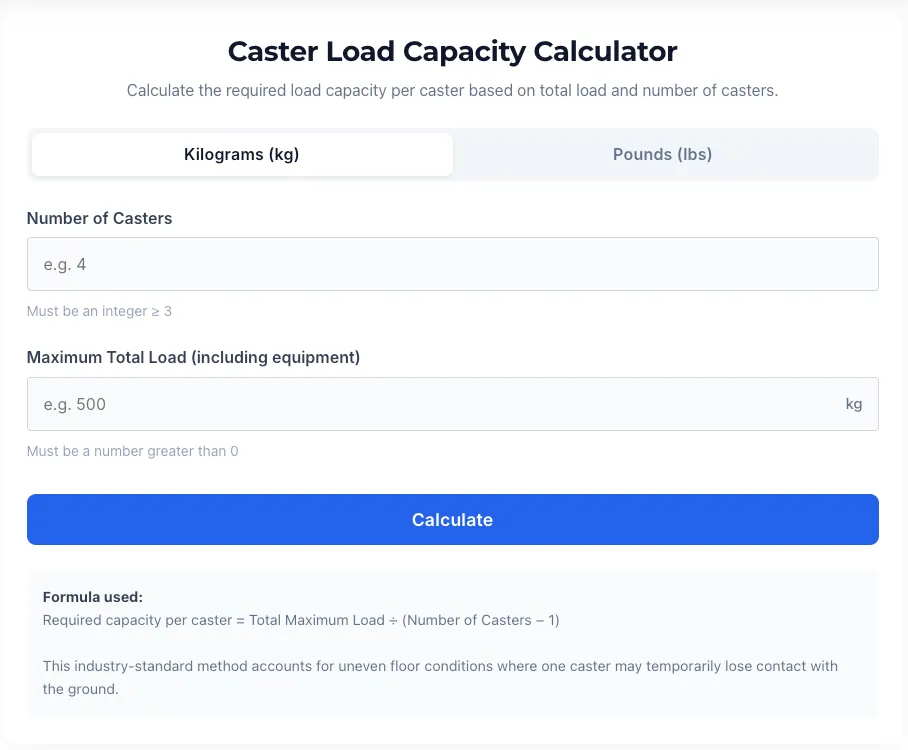
Load capacity is usually the first parameter buyers examine, but it is also one of the most frequently misunderstood. online caster load capacity calculator.
A useful engineering expression is:
Required caster capacity = (equipment weight + maximum payload) ÷ number of supporting casters × application safety factor
Or:
T = (E + Z) / n × S
Where:
- T = required load capacity per caster;
- E = equipment dead weight;
- Z = maximum payload;
- n = number of casters actually supporting the load;
- S = application-dependent safety factor.
Blickle uses this same general calculation method and specifically notes that the load on individual casters may vary when four or more wheels are used. Its safety-factor recommendations vary according to movement type, indoor/outdoor conditions and obstacles.
The important phrase here is:
actually supporting the load.
That leads to one of the most important rules in heavy duty caster selection.
Why You Should Not Automatically Divide the Load by Four
Imagine a cart with four casters.
It is tempting to calculate:
Total loaded weight ÷ 4
But that calculation assumes:
- the frame is perfectly rigid and flat;
- the floor is perfectly level;
- all four casters have exactly the same mounting height;
- the load is perfectly centered;
- there is no dynamic movement.
Real industrial equipment rarely satisfies all five conditions continuously.
When a cart crosses:
- a floor joint;
- a threshold;
- a metal plate;
- an uneven concrete section;
- a pothole;
- debris;
one wheel may temporarily lose contact with the floor.
The other three casters then carry most or all of the load.
TENTE has historically recommended considering the equipment weight plus payload divided among three supporting casters in a conventional four-caster arrangement to provide reserve for situations where one caster temporarily loses floor contact.
Hamilton likewise warns that simply dividing the load by the number of casters can produce serious errors because actual loads may be unevenly distributed.
Example
Suppose an industrial machine weighs:
Equipment: 800 kg
Maximum payload: 3,200 kg
Total:
4,000 kg
A simple four-wheel calculation gives:
4,000 ÷ 4 = 1,000 kg per caster
But if you design around three-point support:
4,000 ÷ 3 = 1,333 kg per caster
That is already a 33% difference before considering:
- impacts;
- powered movement;
- speed;
- severe floor conditions;
- off-center loading.
This is why a caster rated at exactly 1,000 kg should not automatically be considered suitable simply because four of them mathematically equal a 4,000 kg load.
For BigCaster’s load-based options, the load figure should always be interpreted as per-wheel/caster capacity under the stated product and operating conditions, rather than as the allowable total weight of a four-wheel vehicle.
3. Select an Appropriate Safety Factor
There is no universal caster safety factor that is correct for every application.
The required margin depends on the difference between actual service conditions and the conditions under which the caster rating was established.
For example, Blickle identifies standard conditions including approximately:
- smooth floors;
- 4 km/h travel speed;
- even load distribution;
- straight travel;
- ambient temperatures around 15–28°C.
Its published guidance uses safety factors of approximately 1.0–1.5 for manual indoor transport under mild conditions, rising as high as 2.0–3.0 for motorized outdoor transport with significant obstacles. These are application guidelines tied to Blickle’s rating methodology, not universal numbers that should be copied blindly to every manufacturer’s caster.
A useful decision principle is:
Mild service
Examples:
- manual movement;
- smooth indoor concrete;
- low speed;
- relatively even load;
- occasional use.
A modest engineering margin may be sufficient.
Moderate service
Examples:
- frequent movement;
- small floor joints;
- moderate impacts;
- less predictable load distribution.
A larger reserve becomes appropriate.
Severe service
Examples:
- powered towing;
- outdoor movement;
- rough concrete;
- potholes;
- ramps;
- high frequency;
- repeated impacts.
The caster should be selected with substantially more reserve and usually requires engineering review.
Extreme service
Examples:
- very high concentrated loads;
- high speed;
- extreme temperatures;
- severe shock;
- large obstacles;
- unusual chemicals;
- safety-critical equipment.
Do not solve these applications by simply multiplying a catalog rating by an arbitrary number.
The complete caster system should be reviewed.
4. Understand Static Load and Dynamic Load
A heavy duty caster may experience two fundamentally different loading conditions.
Static Load Capacity
Static load exists when the equipment is primarily stationary.
Static capacity relates to the caster or wheel’s ability to support weight without unacceptable permanent deformation while not travelling.
This matters for:
- stationary machinery;
- storage racks on wheels;
- equipment that moves only during installation;
- heavy fixtures.
Dynamic Load Capacity
Dynamic load capacity describes the load that a caster can handle while moving under defined test conditions.
Movement introduces additional stresses through:
- wheel rotation;
- swivel movement;
- obstacle impact;
- vibration;
- heat generation;
- bearing loads;
- frame deflection.
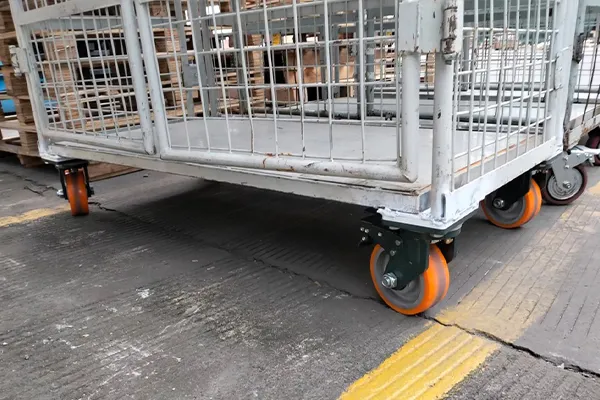
Blickle states that its dynamic caster capacities are established using rotating-bench tests corresponding to DIN EN / ISO caster standards, while static capacity is treated separately.
This distinction matters when comparing suppliers.
Never compare load numbers without understanding the test conditions
A “2,000 kg caster” from two manufacturers is not necessarily equivalent.
Ask:
- Is the figure static or dynamic?
- At what speed was it tested?
- On what surface?
- Over what test duration?
- Were obstacles included?
- At what temperature?
- What bearing was used?
- What wheel material was used?
Hamilton also cautions that capacity ratings can differ between manufacturers because rating assumptions and operating conditions may differ.
For B2B procurement, test condition transparency is more useful than a large headline number.
5. Account for Shock Loading
Shock load can be much more destructive than a steady load.
Typical causes include:
- dropping material onto a cart;
- crossing expansion joints;
- travelling over door thresholds;
- passing over dock plates;
- potholes;
- rough concrete;
- rails;
- debris;
- sudden direction changes;
- moving down ramps;
- high-speed impacts.
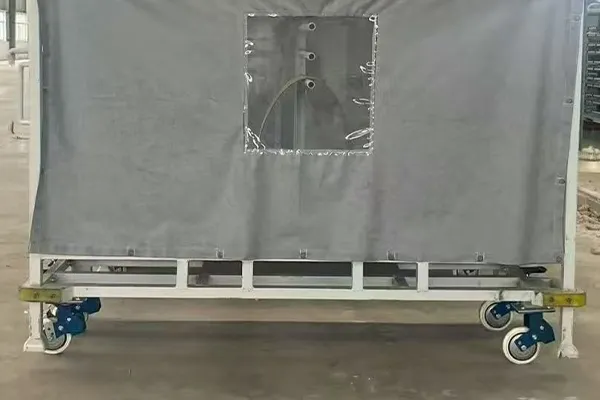
Hamilton notes that severe impact conditions can temporarily force individual wheels to experience loads several times higher than normal distributed loading.
That does not mean every caster should simply be rated at three times the normal load. It means shock severity must be treated as a separate engineering variable.
Possible solutions include:
- selecting a larger wheel diameter;
- using resilient wheel tread;
- increasing caster load reserve;
- increasing fork and top-plate strength;
- using larger axles;
- using more robust swivel structures;
- using spring-loaded caster systems where appropriate;
- reducing operating speed.
For exceptionally high loads and severe industrial environments, compare Extra Heavy Duty Casters rather than simply increasing the nominal capacity of a standard heavy-duty model.
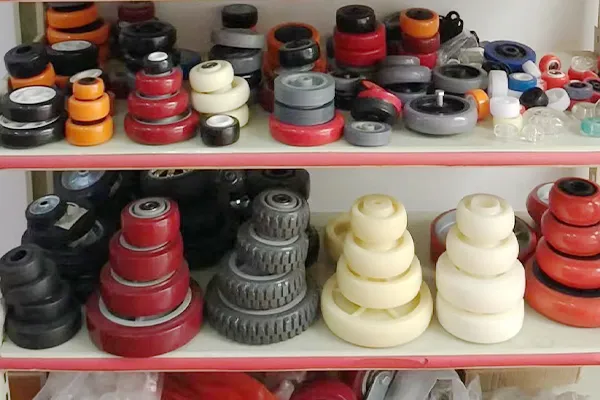
6. Choose the Correct Caster Wheel Diameter
Wheel diameter has a major effect on how an industrial cart behaves.
Hamilton identifies wheel size as one of the most important variables affecting rollability; larger wheels generally require less effort to move a given load and negotiate floor irregularities more effectively.
In general, increasing wheel diameter can improve:
- obstacle crossing;
- rolling efficiency;
- ease of manual pushing;
- ability to cross floor joints;
- bearing rotational conditions;
- resistance to small debris.
However, larger wheels also increase:
- overall caster height;
- swivel radius;
- required equipment clearance;
- sometimes cost and weight.
Therefore, “use the largest wheel possible” should be interpreted as:
Use the largest practical wheel that fits the equipment envelope and satisfies the required load, maneuverability and mounting constraints.
How Wheel Diameter Affects Obstacle Crossing
Imagine two wheels carrying the same load:
- one has a 100 mm diameter;
- one has a 200 mm diameter.
Both approach the same 10 mm floor joint.
The obstacle represents:
- 10% of the smaller wheel diameter;
- only 5% of the larger wheel diameter.
The larger wheel encounters a much less severe geometric obstacle relative to its size.
This reduces the force needed to climb over the obstruction and generally lowers impact severity.
Blickle’s industrial caster testing guidance itself expresses obstacle height as a percentage of wheel diameter, illustrating why diameter and obstacle height should always be considered together.
4-Inch vs 5-Inch vs 6-Inch vs 8-Inch Heavy Duty Casters
Do not assume wheel diameter alone determines capacity.
A heavy-duty 6-inch caster may carry more than an 8-inch caster of another construction because load capacity also depends on:
- wheel material;
- wheel width;
- hub design;
- bearing;
- axle;
- fork construction;
- swivel raceway;
- top plate;
- manufacturing quality.
Use diameter primarily to determine:
- available installation height;
- obstacle capability;
- desired push force;
- maneuverability;
- floor conditions.
Then verify load capacity separately.
Internal links:
4 inch heavy duty casters → relevant size page
5 inch heavy duty casters → relevant size page
6 inch heavy duty casters → relevant size page
8 inch heavy duty casters → relevant size page
For applications where mounting height must remain exceptionally low, see Low Profile Casters.
7. Choose the Right Caster Wheel Material
There is no single “best heavy duty caster material.”
Each material represents a compromise between:
- load capacity;
- rolling resistance;
- floor protection;
- vibration absorption;
- noise;
- wear resistance;
- impact performance;
- water resistance;
- chemical resistance;
- temperature capability.
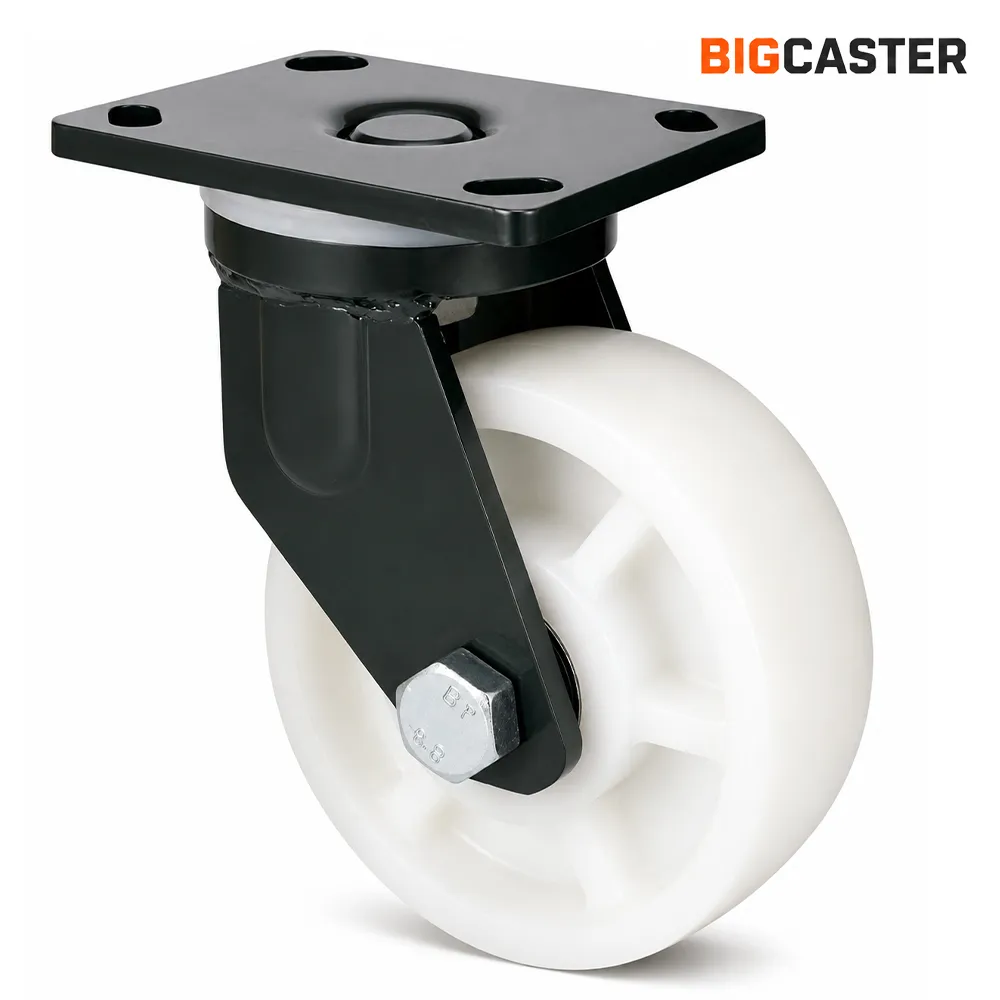

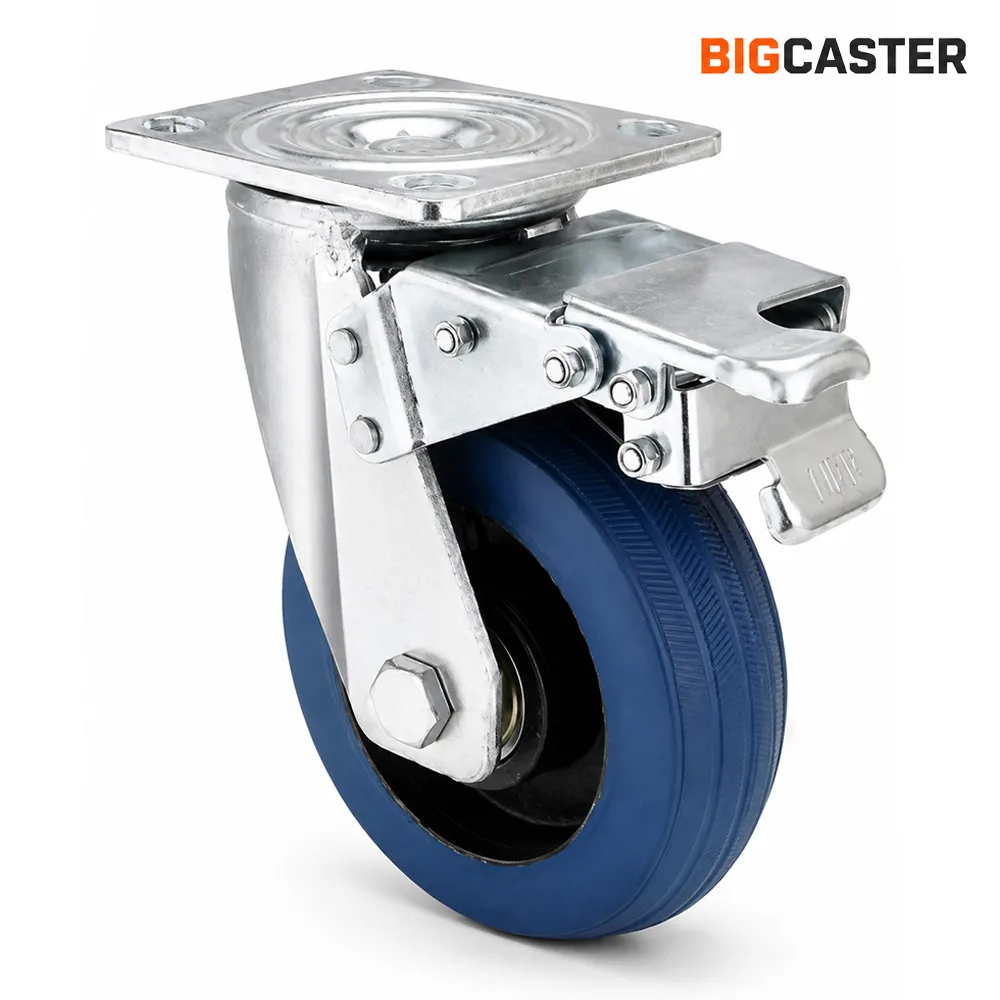
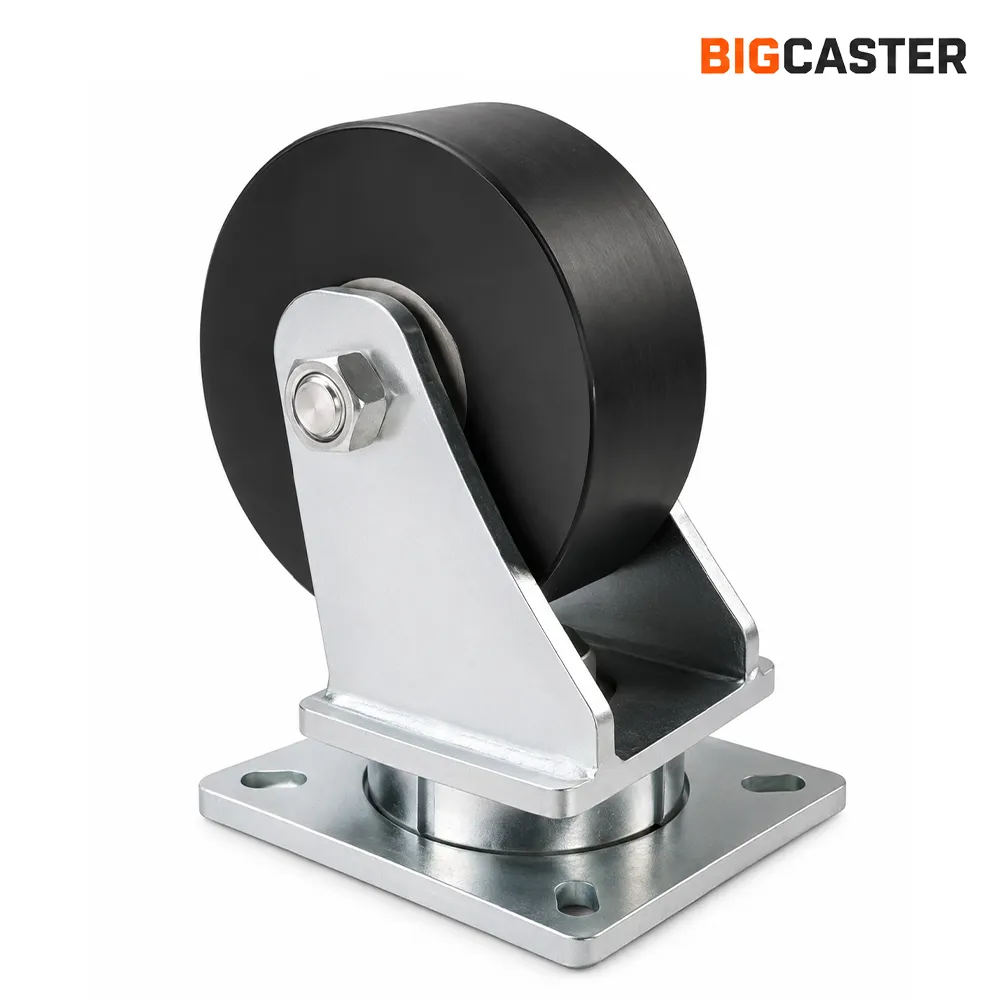
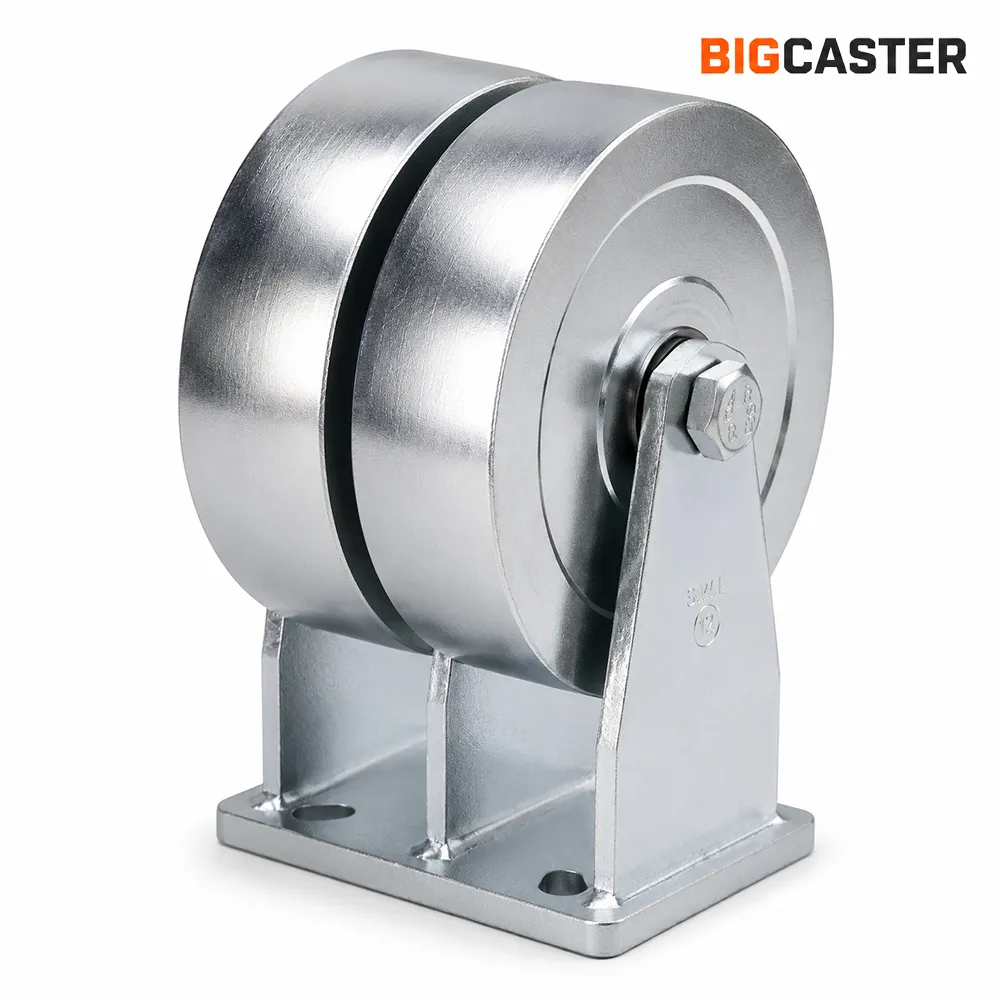
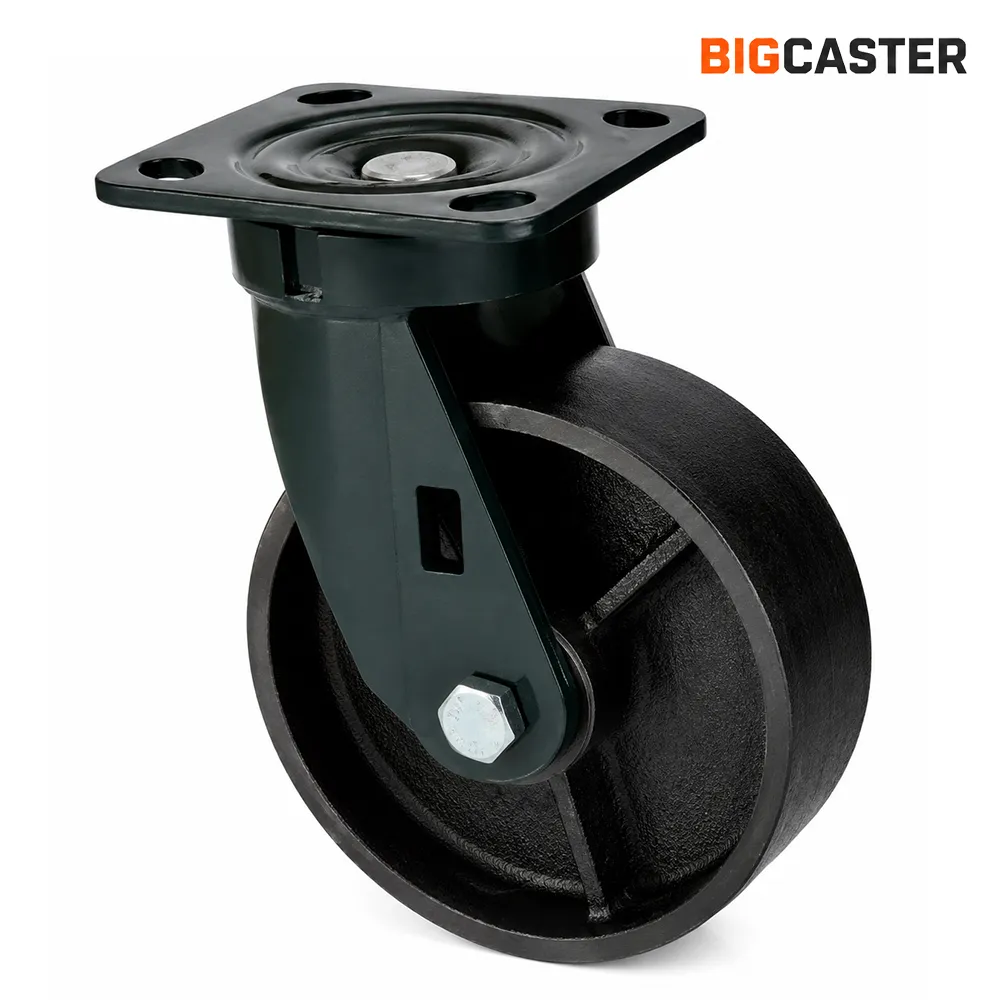
For BigCaster’s main heavy-duty product range, the most important materials include:
Chinese industrial supplier guidance and MISUMI’s material-selection references similarly emphasize that wheel materials should be chosen according to load, wear, oil/chemical exposure, water, temperature and environmental conditions—not by material name alone.
Polyurethane Heavy Duty Casters
Polyurethane is one of the most versatile materials for industrial caster wheels.
Typical advantages include:
- high wear resistance;
- higher load capability than many soft rubber wheels;
- relatively good floor protection;
- lower noise than metal wheels;
- good resistance to many oils and industrial contaminants;
- useful balance between load capacity and rolling performance.
Polyurethane is therefore widely used on:
- industrial carts;
- machinery;
- logistics equipment;
- warehouse equipment;
- production-line equipment.
Hamilton notes that polyurethane formulations vary significantly and that performance cannot be judged from color or hardness alone. Formulation, thickness and rebound characteristics influence load capacity, rolling force and durability.
This is an important purchasing point.
Two PU wheels that look almost identical can perform differently under heavy loads.
Internal link: Heavy Duty Polyurethane Casters → PU material category page.
Rubber Heavy Duty Casters
Rubber is useful when the application prioritizes:
- vibration absorption;
- quieter operation;
- floor protection;
- shock cushioning.
Rubber wheels are especially useful when the floor is:
- uneven;
- rough;
- sensitive to damage;
- noisy when hard wheels are used.
The trade-off is usually increased rolling resistance compared with harder wheel materials.
For very heavy manually pushed carts, this difference can become substantial.
Hamilton’s wheel-selection data similarly shows the broad trade-off between resilient wheels—better cushioning, floor protection and noise reduction—and harder wheels with better rollability and load potential.
Internal link: Heavy Duty Rubber Casters → rubber material category page.
PA / Nylon Heavy Duty Casters
Polyamide, commonly called nylon, is widely used where buyers need:
- high compression strength;
- relatively low rolling resistance;
- resistance to oils and many chemicals;
- good wear resistance;
- high load capacity on suitable floors.
Because nylon is relatively hard, the disadvantages may include:
- more vibration;
- more noise;
- less cushioning;
- greater risk of floor marking or damage than softer wheels.
Nylon performs especially well on smooth industrial floors where low rolling resistance and high capacity matter more than cushioning.
Internal link: Heavy Duty Nylon / PA Casters → PA category page.
MC Nylon Casters
MC nylon is commonly selected for high-load industrial wheels because its mechanical properties allow rigid, dimensionally stable wheel constructions.
It can be useful for:
- heavy machinery;
- manufacturing equipment;
- industrial transport systems;
- high static loads;
- applications where a hard, low-deformation wheel is preferred.
As with standard nylon, the harder tread means that floor condition becomes important.
A wheel with excellent load capacity can still be the wrong choice if the floor is rough or easily damaged.
Internal link: MC Nylon Heavy Duty Casters → MC nylon category page.
Cast Iron Casters
Cast iron wheels provide:
- high load capacity;
- low rolling resistance on smooth floors;
- high compression resistance;
- good durability in suitable industrial environments.
But they offer little cushioning.
Typical disadvantages include:
- high noise;
- impact transmission;
- poor floor protection.
Cast iron is therefore more appropriate where floor damage and noise are less important than capacity and durability.
Internal link: Cast Iron Heavy Duty Casters → cast iron category page.
Steel Casters
Steel wheels are generally reserved for demanding applications that require:
- extremely high load capacity;
- high structural strength;
- resistance to heavy compression;
- very low deformation.
They can be appropriate for severe industrial loads, but users must accept:
- almost no cushioning;
- high noise;
- strong transmission of shock;
- potential floor damage.
Hamilton similarly notes that forged steel wheels offer very high capacity and good rollability but poor cushioning and floor protection.
Internal link: Steel Heavy Duty Casters → steel category page.
8. Use Floor Conditions to Refine Wheel Selection
Caster selection should consider the relationship in both directions:
Floor → Wheel
and:
Wheel → Floor
A poor floor can destroy a caster.
A poorly selected caster can destroy a floor.
Hamilton explicitly highlights both effects in its industrial wheel selection guidance.
Smooth Concrete Floors
Smooth industrial concrete allows the widest range of wheel choices.
Possible options include:
- polyurethane;
- nylon;
- MC nylon;
- cast iron;
- steel.
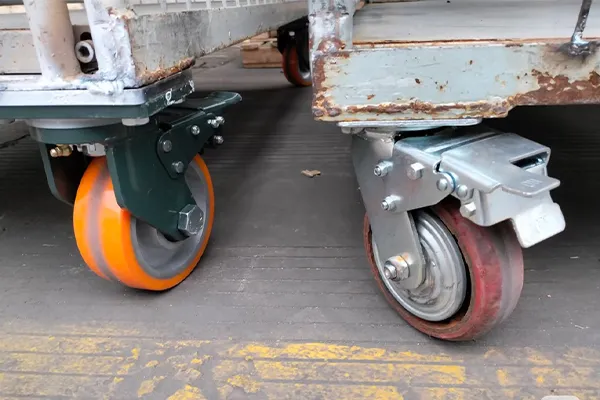
If rolling resistance is important, harder wheels may perform well.
If noise and floor protection are important, polyurethane is often a better compromise.
Rough Concrete Floors
Rough concrete increases:
- vibration;
- rolling resistance;
- impact loads;
- bearing stress;
- tread wear.
Consider:
- larger wheel diameter;
- resilient tread;
- lower travel speed;
- higher load reserve.
A small hard wheel carrying a very heavy load across damaged concrete is one of the most demanding combinations for a caster.
Epoxy or Finished Floors
Floor protection becomes more important.
PU or suitable rubber wheels are usually worth considering before metal wheels.
Always verify:
- marking behavior;
- chemical compatibility;
- actual floor coating.
Outdoor Pavement
Outdoor surfaces introduce:
- cracks;
- water;
- debris;
- slopes;
- larger obstacles;
- temperature variation.
This generally pushes the selection toward:
- larger wheels;
- more robust caster frames;
- greater reserve capacity;
- corrosion-aware construction.
Steel Floors and Rails
Hard wheels may be suitable, but:
- noise;
- impact;
- traction;
- tracking behavior
must be evaluated.
A Useful Rule of Thumb: Hard Floor, Softer Wheel
A common industry rule is:
Hard floor → consider a softer wheel
Soft floor → consider a harder wheel
The principle is useful because resilient tread can reduce vibration and protect hard flooring, whereas harder wheels can reduce rolling losses on softer surfaces.
But this is only a starting point.
Final selection still depends on:
- load;
- speed;
- obstacle height;
- temperature;
- chemicals;
- debris;
- required life.
9. Evaluate Starting, Rolling and Swivel Resistance
A heavy duty caster must not only carry the load.
The equipment must also be movable.
Three concepts are useful.
Starting Resistance
The force required to move the equipment from rest.
This can be especially important for manually pushed carts carrying heavy loads.
Rolling Resistance
The force required to keep the equipment moving at approximately constant speed.
Swivel Resistance
The force required to rotate the swivel caster into a new travel direction.
Blickle identifies wheel diameter, tread, bearings, total load and floor condition as major influences on these resistances. Low rolling resistance is generally associated with larger wheel diameter, harder or high-rebound tread and efficient bearings.
Why Rated Capacity Does Not Tell You Push Force
Suppose two wheels are both rated for 1,500 kg.
Wheel A:
- smaller diameter;
- soft tread.
Wheel B:
- larger diameter;
- hard/high-rebound tread.
Both may satisfy the load requirement, but Wheel B could require substantially less push force on a smooth floor.
That difference matters for:
- worker ergonomics;
- acceleration;
- AGV energy consumption;
- maneuverability;
- equipment productivity.
A professional caster specification therefore asks:
Can the caster carry the load?
and also:
Can the equipment still be moved efficiently?
10. Select the Correct Wheel Bearing
The wheel bearing affects:
- rolling resistance;
- load capability;
- durability;
- maintenance;
- shock resistance.
Common industrial options include:
Plain / Sleeve Bearings
Simple construction.
Useful in:
- lower-speed applications;
- certain dirty environments;
- applications where simplicity is important.
They generally produce more friction than ball-bearing solutions. Heavy-duty casters typically do not use plain bearings.
Roller Bearings
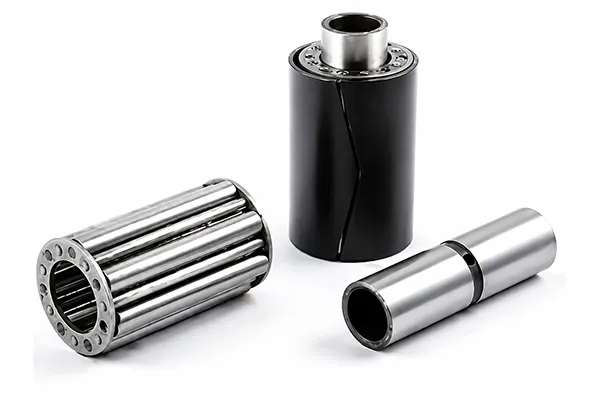
Roller bearings provide better rolling performance than simple plain bearings and are widely used in industrial wheels.
Ball Bearings
Ball bearings generally offer low rolling resistance and are a common choice for:
- frequent movement;
- manually pushed equipment;
- applications where easy rolling is important.
Precision Ball Bearings
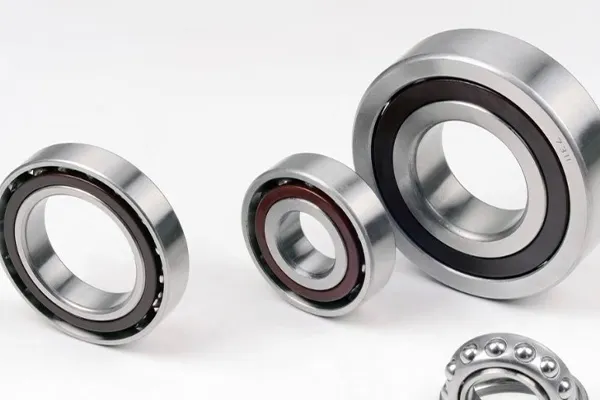
Used when improved rolling quality, alignment and operating consistency are important.
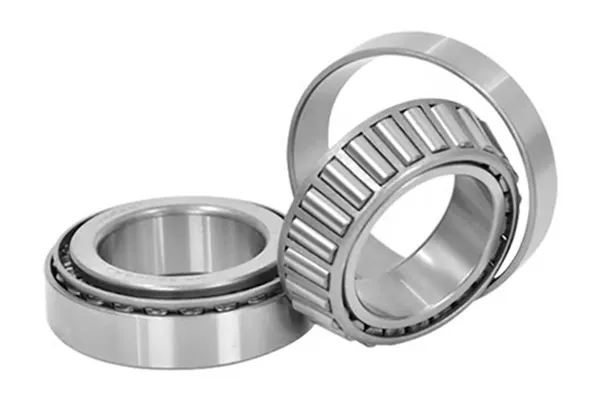
Tapered Roller Bearings
Tapered roller bearings can be useful in severe-duty applications involving high radial loads and additional side or thrust forces.
Do not select a bearing only because it is theoretically “stronger.”
Evaluate:
- speed;
- shock;
- side load;
- dust;
- water;
- maintenance;
- temperature.
BigCaster uses tapered bearings for the rotating parts of its E-series casters, which gives them better load-bearing capacity and impact resistance.
11. Choose the Right Swivel and Rigid Caster Configuration
Caster arrangement has a major effect on maneuverability and directional stability.
Two Swivel + Two Rigid Casters
This is one of the most common industrial configurations.
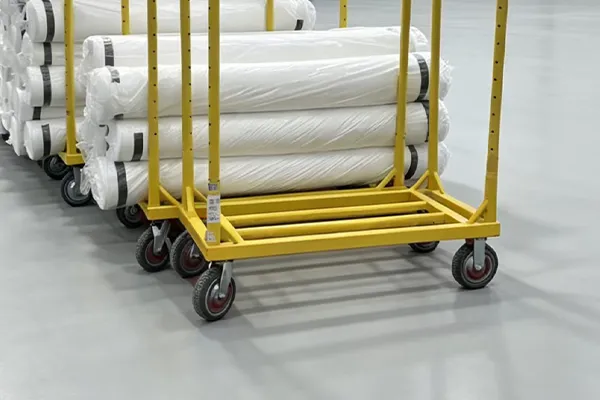
Advantages:
- good directional stability;
- predictable steering;
- suitable for longer travel;
- good for heavy carts.
It is often suitable for:
- factory carts;
- material handling;
- logistics equipment;
- industrial platforms.
The rigid casters help keep the cart tracking in a straight line.
Four Swivel Casters
Advantages:
- excellent multidirectional movement;
- easy positioning in confined spaces;
- side movement is possible.
Potential disadvantages:
- less directional stability over long distances;
- more effort may be required to correct caster direction under high loads;
- caster flutter or steering instability can become more important at speed.
This configuration is often appropriate where maneuverability matters more than long straight travel.
Four Swivel Casters with Directional Locks
A directional lock can temporarily make a swivel caster behave more like a rigid caster.

This configuration can provide:
- high maneuverability when unlocked;
- improved straight-line control when locked.
It is useful when equipment must alternate between:
- precise positioning;
- longer-distance movement.
In the medical industry, it is common to use four swivel brake medical casters.
Six-Caster Arrangements
Six-wheel configurations may be used for:
- very long carts;
- high loads;
- special maneuverability requirements.
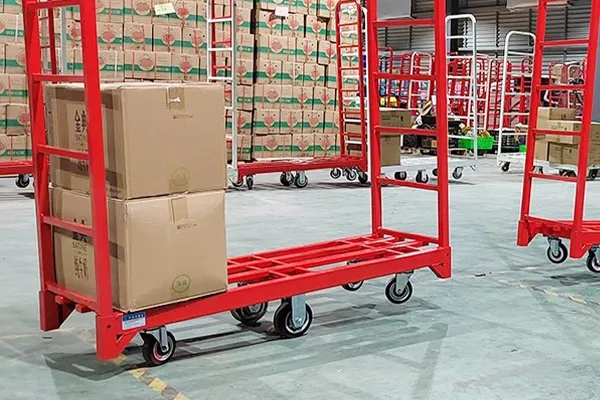
However, simply adding more casters does not guarantee equal load distribution.
Frame stiffness, caster height tolerance and floor flatness remain important.
A poorly designed six-caster frame can still concentrate excessive load on only part of the caster system.
12. Inspect the Heavy Duty Caster Rig, Not Only the Wheel
A caster is a complete structural assembly.
For heavy duty applications, buyers should evaluate:
- top plate thickness;
- fork or yoke thickness;
- swivel raceway;
- ball race construction;
- kingpin or kingpinless design;
- axle diameter;
- weld quality;
- swivel offset;
- wheel bearings;
- brake construction;
- surface treatment.
A high-capacity wheel installed inside a weak bracket does not create a high-capacity caster.
Kingpin vs Kingpinless Heavy Duty Casters
Traditional swivel casters commonly use a kingpin through the swivel assembly.
Kingpinless designs eliminate the central kingpin and may use a larger integrated raceway.
In severe applications, kingpinless designs can offer advantages such as:
- improved resistance to certain shock loads;
- reduced kingpin-related maintenance;
- robust swivel construction.
However, design quality is more important than the label itself.
A well-designed kingpin caster may outperform a poorly manufactured kingpinless caster.
The entire assembly should be evaluated.
Why Caster Offset Matters
Caster offset is the horizontal distance between:
- the swivel axis;
- the wheel axle centerline.
Offset creates the lever arm that allows a swivel caster to trail behind the swivel axis.
It influences:
- steering;
- swivel force;
- turning behavior;
- swivel radius.
Too little offset may increase steering effort.
Excessive offset increases the space required for the caster to swivel and can increase forces in the bracket.
Caster offset should therefore be engineered as part of the complete swivel geometry.
13. Verify the Mounting Plate and Equipment Structure
Heavy duty industrial casters commonly use a top-plate mounting system.
Important dimensions include:
- plate length;
- plate width;
- plate thickness;
- bolt-hole pattern;
- bolt-hole diameter;
- overall caster height;
- swivel radius.
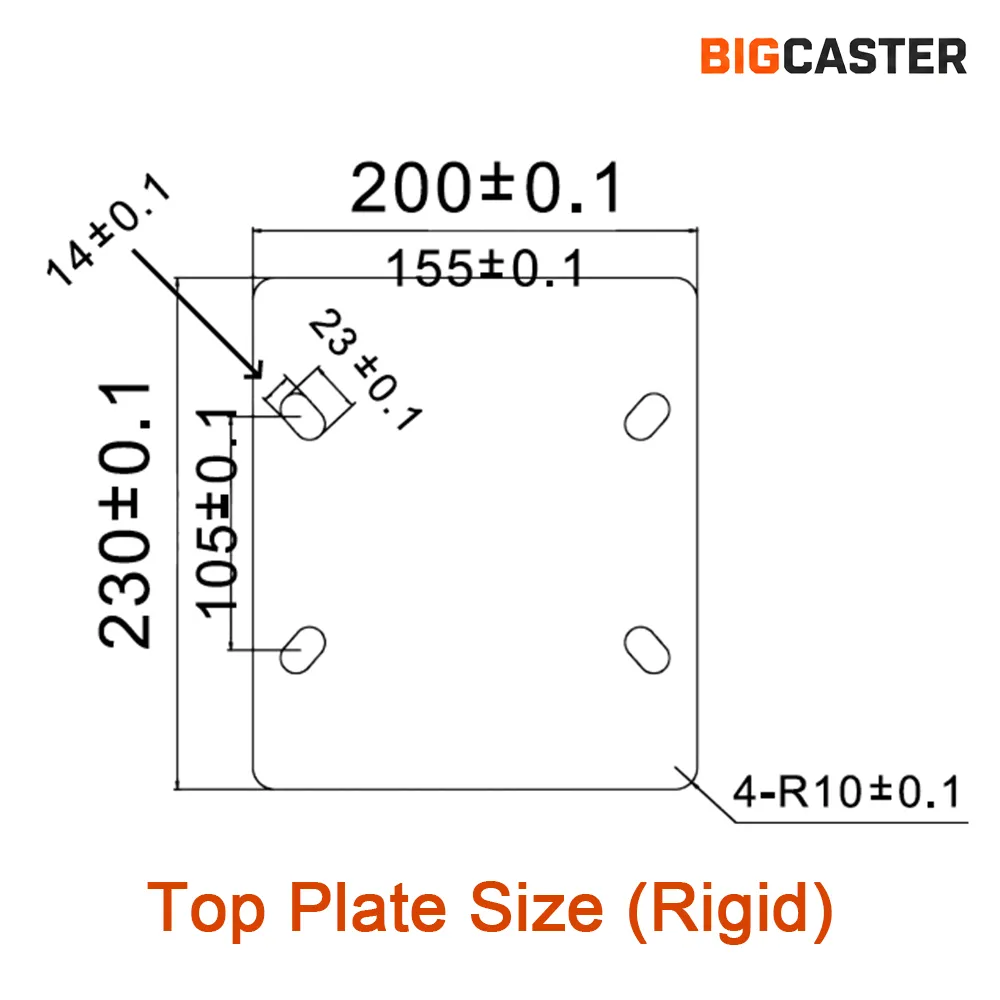
But the equipment frame is equally important.
Consider a caster rated to carry 2,000 kg.
If it is attached to:
- thin sheet metal;
- undersized bolts;
- a weak weldment;
- a flexible frame;
the system may fail before the caster reaches its rated capacity.
The load path is:
load → equipment frame → mounting bolts → caster top plate → swivel assembly → fork → axle → wheel → floor
Every component in this chain must be capable of handling the design load.
For custom industrial machinery, the mounting structure should therefore be treated as part of the caster system rather than as a separate afterthought.
14. Select the Correct Brake or Directional Lock
Heavy duty casters can use different locking systems.
Wheel Brake
Prevents the wheel from rotating.
The caster may still swivel depending on the design.
Swivel Lock
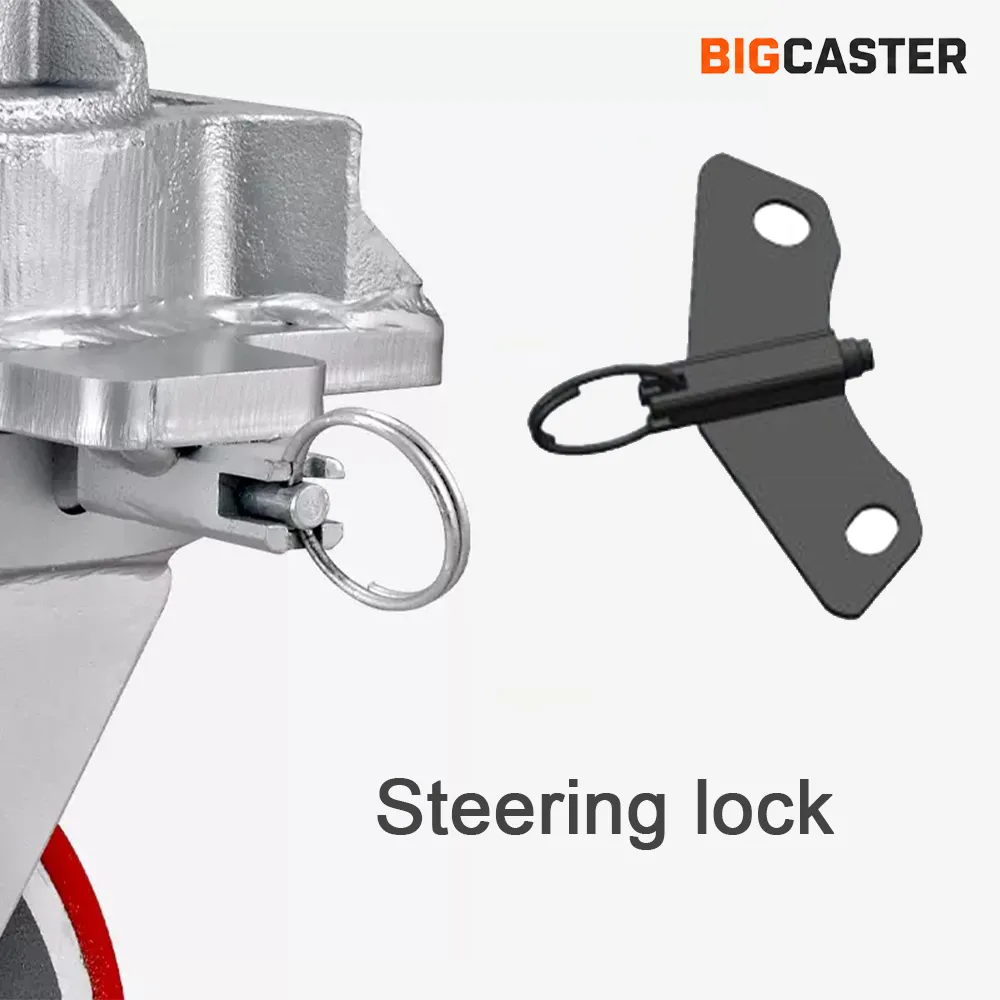
Prevents the swivel head from rotating.
The wheel can continue rolling in the locked direction.
This is useful for converting a swivel caster into a temporary directional caster.
Total Lock Brake
Locks both:
- wheel rotation;
- swivel rotation.
This is useful when equipment must remain stationary during:
- loading;
- assembly;
- maintenance;
- positioning.
However, a caster brake should not automatically be treated as a substitute for a dedicated parking or machine restraint system.
For equipment exposed to:
- slopes;
- vibration;
- substantial external forces;
the overall parking and safety system should be engineered separately.
15. Consider Manual Movement vs Powered Towing
One of the most serious mistakes in caster selection is using a manually rated caster in a powered application without verifying speed and duty.
Powered equipment includes:
- tugger carts;
- tow-line systems;
- AGVs;
- AMRs;
- motorized platforms;
- powered industrial carts.
These applications can create:
- higher travel speed;
- more frequent movement;
- higher bearing temperature;
- more repeated impacts;
- more aggressive direction changes.
Caster capacity is therefore not independent of speed.
Blickle states that heavy-duty transport caster testing under ISO 22883-type conditions is performed around 4 km/h, while wheels/casters designed for higher speeds are addressed under higher-speed test conditions associated with ISO 22884.
That distinction is important.
Never assume:
“The caster carries 2,000 kg at walking speed, therefore it carries 2,000 kg at 16 km/h.”
Always provide the supplier with:
- normal speed;
- peak speed;
- duration;
- loaded/unloaded travel ratio;
- floor obstacles;
- turning frequency.
16. Consider Duty Cycle and Travel Distance
Two casters can carry the same load at the same speed and still experience very different service life.
Consider:
Application A
Moves 20 meters twice a day.
Application B
Moves continuously for eight hours.
The second application places much greater demands on:
- bearings;
- wheel tread;
- polyurethane heat buildup;
- lubrication;
- swivel assembly;
- axle;
- tire/core bond.
For continuous-duty equipment, specification should include:
- distance per shift;
- operating hours;
- average speed;
- number of starts/stops;
- turning frequency;
- load cycle.
This is especially important for automation and production logistics.
17. Evaluate Temperature
Caster materials behave differently as temperature changes.
High temperatures can affect:
- tread hardness;
- polyurethane properties;
- grease;
- bearing seals;
- wheel/core bonds;
- structural components.
Low temperatures can affect:
- elasticity;
- impact behavior;
- lubrication;
- polymer brittleness.
Never specify only:
“High-temperature caster required.”
Instead define:
- normal ambient temperature;
- maximum temperature;
- exposure duration;
- whether heat is continuous or intermittent;
- floor temperature;
- whether the caster enters an oven or heated zone.
Hamilton similarly recommends considering special wheel materials, bearings and lubricants for extreme hot or cold environments.
18. Consider Water, Oil and Chemical Exposure
A wheel material that performs well in a dry warehouse may perform poorly in a chemical processing environment.
Ask whether the caster will contact:
- water;
- steam;
- cutting fluids;
- hydraulic oil;
- grease;
- acids;
- alkalis;
- solvents;
- cleaning agents.
Different polymers have very different chemical resistance.
Even if the wheel itself is compatible, other components may not be:
- bearings;
- grease;
- seals;
- plated brackets;
- axle hardware.
Chinese MISUMI material-selection data similarly shows significant differences among rubber, nylon, polyurethane, phenolic and MC nylon in resistance to oils, water and chemicals, while cautioning that material tables are only general references and actual caster performance depends on complete operating conditions.
For unusual chemicals, provide:
- chemical name;
- concentration;
- temperature;
- duration of exposure.
Do not rely on a generic “chemical resistant” label.
19. Noise and Floor Protection Matter in Heavy Duty Applications
High load capacity is not always the only priority.
In some factories, laboratories and assembly environments, a caster must also:
- reduce vibration;
- protect expensive floors;
- lower operating noise;
- protect sensitive cargo.
Hard steel and cast iron wheels may offer excellent load capability and rolling efficiency but transfer more vibration and can damage floors.
Rubber offers much better cushioning but generally increases rolling resistance.
Polyurethane often represents a useful middle ground.
Hamilton’s comparative wheel guidance describes this same engineering compromise between rollability, durability, floor preservation and quiet operation.
The correct caster is therefore rarely the product that maximizes one parameter.
It is the caster that offers the best balance of parameters for the actual application.
20. Heavy Duty Caster Selection by Application
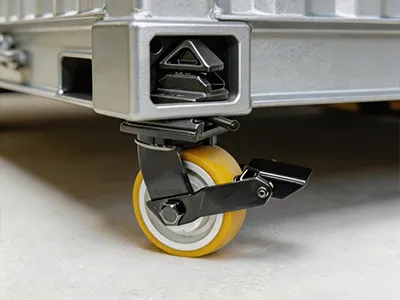
For container handling applications, see Container Casters.
For machinery where installation height is severely restricted, compare Low Profile Casters.
21. Ten Common Heavy Duty Caster Selection Mistakes
1. Dividing the total load by four without considering three-point support
Uneven floors and frame tolerances can temporarily unload one caster.
2. Forgetting the weight of the equipment itself
Payload is only part of the total weight.
Always calculate:
equipment + payload
3. Comparing static capacity with dynamic capacity
These numbers describe different conditions.
4. Selecting purely by rated load
Capacity alone says nothing about:
- push force;
- speed;
- floor protection;
- noise;
- shock;
- temperature.
5. Choosing wheel diameter only according to load capacity
Diameter also affects:
- obstacle crossing;
- push force;
- overall height.
6. Ignoring floor joints and thresholds
A caster that works perfectly on a test floor may fail repeatedly on a damaged factory floor.
7. Using manual-duty casters for powered towing
Higher speed and continuous operation can greatly change service demands.
8. Ignoring the equipment mounting frame
A high-capacity caster cannot compensate for a weak mounting structure.
9. Using four swivel casters without considering directional control
A fully swivel arrangement can become difficult to control over long distances.
10. Choosing a wheel material from a generic material chart alone
Actual caster performance depends on:
- formulation;
- wheel geometry;
- bearing;
- load;
- speed;
- floor;
- environment.
22. Heavy Duty Caster Specification Checklist
For a new project, provide the caster manufacturer with the following information.
Load
- Equipment dead weight:
- Maximum payload:
- Total loaded weight:
- Number of casters:
- Center of gravity:
- Expected uneven loading:
Mobility
- Manual or powered:
- Maximum speed:
- Distance per shift:
- Operating hours per day:
- Number of starts/stops:
- Straight travel or frequent turning:
Floor
- Smooth concrete:
- Rough concrete:
- Epoxy:
- Asphalt:
- Steel:
- Outdoor:
- Floor joints:
- Maximum obstacle height:
- Debris present:
Wheel
- Preferred wheel diameter:
- Maximum wheel diameter:
- Maximum caster overall height:
- Floor protection required:
- Noise limitation:
- Preferred material, if known:
Environment
- Minimum temperature:
- Maximum temperature:
- Water:
- Oil:
- Grease:
- Chemicals:
- Dust:
- Outdoor exposure:
Caster Configuration
- Swivel:
- Rigid:
- Directional lock:
- Wheel brake:
- Total lock:
Mounting
- Top plate length:
- Top plate width:
- Bolt-hole spacing:
- Bolt-hole diameter:
- Available swivel clearance:
Providing this information is much more effective than simply asking:
“What 2-ton caster do you recommend?”
23. Heavy Duty Caster Standards and Test Conditions
Industrial caster standards provide useful frameworks for terminology, testing and rated performance, but users should understand their scope.
Internationally, relevant ISO caster standards include test methods for transport equipment casters under defined speed and operating conditions.
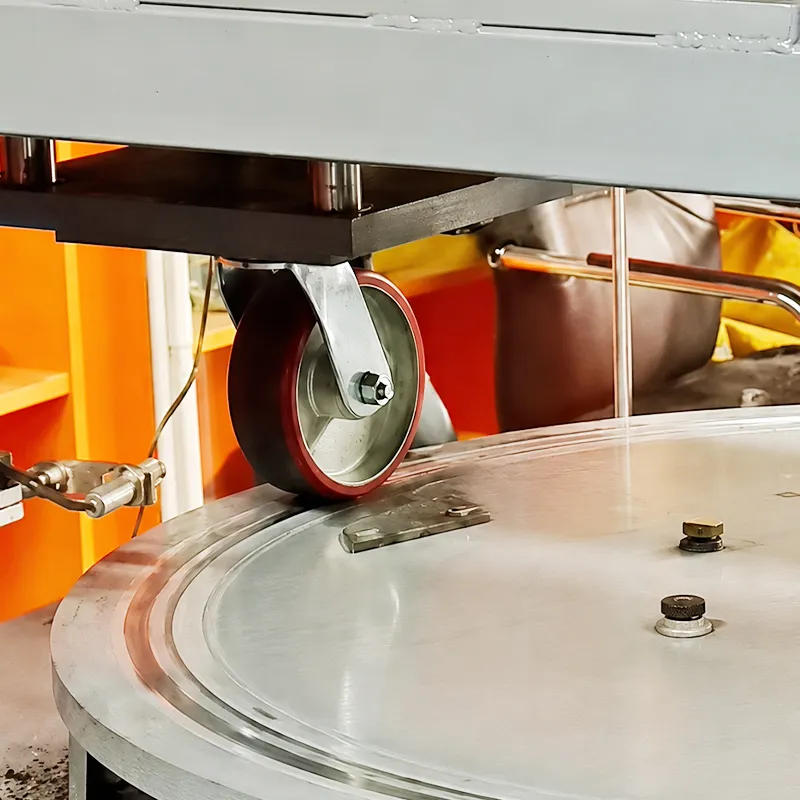
For example, Blickle states that caster testing according to DIN EN 12532 / ISO 22883 uses defined conditions including approximately:
- 4 km/h speed;
- controlled temperature;
- hard horizontal test surfaces;
- specified obstacle heights;
- defined test cycles.
Higher-speed applications are evaluated differently.
The practical lesson is simple:
A rated load is meaningful only when its test and application conditions are understood.
24. When Should You Consider Extra Heavy Duty Casters?
There is no universal industry boundary at which a caster suddenly becomes “extra heavy duty.”
The correct classification depends on design and application.
However, extra heavy duty caster construction should be considered when the application involves combinations such as:
- very high load per wheel;
- large industrial machinery;
- container handling;
- severe shock;
- heavy outdoor equipment;
- large-diameter wheels under high load;
- high structural safety requirements;
- continuous demanding service.
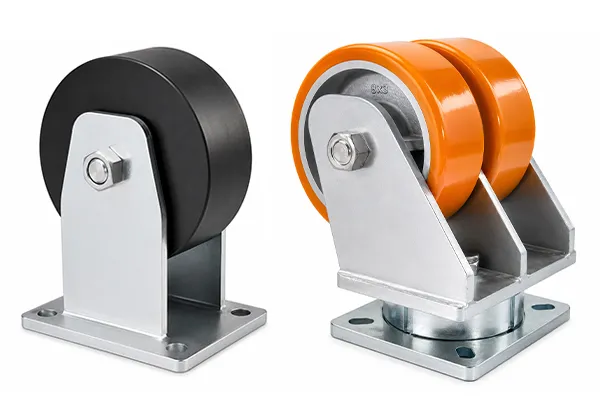
These casters may use:
- thicker top plates;
- reinforced forks;
- larger axles;
- larger swivel raceways;
- high-capacity bearings;
- twin wheels;
- steel, cast iron or high-capacity engineering polymer wheels.
For these applications, see BigCaster’s Extra Heavy Duty Casters.
25. When Should You Ask for a Custom Caster?
A standard catalog caster is not always the best solution.
Customization may be appropriate when you need:
- special load capacity;
- unusual wheel diameter;
- non-standard mounting plate;
- limited overall height;
- special wheel width;
- unusual swivel offset;
- custom brake;
- special bearing;
- special material;
- extreme temperature resistance;
- unique equipment interface.
BigCaster manufactures heavy duty and extra heavy duty industrial casters in Yangjiang, Guangdong, China and can develop caster configurations according to application requirements.
For a casters custom project, provide the complete application profile described in this guide rather than specifying only wheel diameter and nominal load.
FAQ: Heavy Duty Caster Selection
How do I calculate the load capacity required for heavy duty casters?
Start with:
equipment dead weight + maximum payload
Then divide by the number of casters expected to support the load and apply an appropriate engineering margin based on:
- floor;
- speed;
- shock;
- load distribution;
- duty cycle;
- environment.
For conventional four-caster equipment, designers frequently consider the possibility that only three casters may carry the full load on uneven surfaces.
Why do caster guides sometimes divide a four-wheel load by three?
Because a rigid frame and uneven floor may cause one wheel to temporarily lose contact with the surface.
The remaining three casters then support the load.
Using three supporting casters for preliminary calculation can therefore provide useful reserve against uneven loading.
What safety factor should I use for caster selection?
There is no single factor suitable for every caster.
The correct margin depends on:
- manual vs powered movement;
- indoor vs outdoor operation;
- floor condition;
- speed;
- obstacles;
- impact;
- load distribution.
Manufacturer rating methodology should always be considered before applying a factor.
What is the difference between static and dynamic caster load capacity?
Static capacity describes the ability to support a load while essentially stationary.
Dynamic capacity describes caster performance while travelling under specified test conditions.
For equipment that moves regularly, dynamic capacity is generally the more relevant figure.
Are larger caster wheels easier to push?
Generally, yes.
Increasing wheel diameter reduces the relative size of floor obstacles and usually improves rollability.
However, wheel material, tread, bearing, load and floor condition also influence push force.
What is the best caster wheel for concrete floors?
There is no single material suitable for every concrete floor.
For smooth concrete:
- PU;
- nylon;
- MC nylon;
- cast iron;
- steel
may all be possible depending on other requirements.
For rough concrete, larger-diameter resilient wheels are often preferable because they reduce vibration and impact.
Polyurethane vs nylon casters: which is better for heavy loads?
Nylon generally offers:
- high rigidity;
- low rolling resistance;
- good compression performance.
Polyurethane usually provides:
- better cushioning;
- lower noise;
- better floor protection.
The correct choice depends on floor conditions and mobility requirements rather than load rating alone.
When should I use cast iron or steel caster wheels?
Consider cast iron or steel when:
- very high load capacity is required;
- the floor is sufficiently robust;
- noise is acceptable;
- cushioning is not required.
They are generally less suitable when protecting finished floors is important.
Should a heavy cart use swivel or rigid casters?
For many industrial carts, two swivel + two rigid casters provide a practical balance between:
- steering;
- straight-line stability.
Four swivel casters offer greater multidirectional maneuverability but may be harder to control during long-distance travel.
Does travel speed affect caster load capacity?
Yes.
Speed affects:
- impact;
- tread heating;
- bearings;
- vibration;
- durability.
A load rating established at walking speed should not automatically be assumed valid for higher-speed towing.
Can I simply select a caster with a higher load capacity than required?
Not always.
An oversized caster may still be incorrect if it has:
- the wrong wheel material;
- excessive rolling resistance;
- insufficient wheel diameter;
- inadequate speed capability;
- poor chemical resistance;
- unsuitable mounting dimensions.
Caster selection is a system optimization problem, not only a capacity problem.
Final Selection Principle
The correct heavy duty caster is not necessarily:
- the strongest caster;
- the largest caster;
- the hardest wheel;
- the most expensive caster.
It is the caster whose load capacity, wheel material, wheel diameter, bearings, bracket structure, mobility, mounting and environmental resistance match the actual operating conditions.
A professional selection process therefore follows this order:
1. Define the application
→ 2. Calculate the actual load
→ 3. Account for uneven loading and safety margin
→ 4. Evaluate shock and dynamic conditions
→ 5. Select wheel diameter
→ 6. Select wheel material
→ 7. Evaluate floor and rolling resistance
→ 8. Select bearing and caster configuration
→ 9. Verify mounting and brakes
→ 10. Verify speed, duty cycle and environment
For standard industrial applications, explore BigCaster’s Heavy Duty Casters.
For very high loads or severe operating conditions, see our Extra Heavy Duty Casters.
For dedicated container-handling systems, visit Container Casters.
For applications requiring high capacity with minimal mounting height, see Low Profile Casters.
If your application does not fit a standard configuration, provide BigCaster with your equipment weight, payload, wheel quantity, floor condition, maximum speed, required wheel diameter, mounting dimensions and operating environment. We can then evaluate the appropriate caster configuration or develop a customized heavy duty caster solution.