
Custom Industrial Caster Solutions
BigCaster provides custom caster wheels for projects requiring non-standard mounting dimensions, higher load capacity, different wheel sizes, special wheel materials or application-specific caster configurations.
Whether you need to modify an existing heavy duty caster, replace a discontinued wheel assembly or develop a caster around new machinery, we can review the equipment parameters first and identify a practical customization direction.
#Custom Load Capacity, #Custom Mounting Plate, #Custom Wheel Size, #Special Bracket Configuration
A custom caster is normally required because a standard product fails to meet one or more important equipment constraints. The problem may involve mounting, load distribution, wheel dimensions, floor conditions or the way the machine moves. Identifying that constraint first makes the customization process more efficient.
Machinery and equipment often have fixed mounting points. If a standard caster plate is too large, too small or uses a different bolt-hole pattern, a custom caster mounting plate may provide a better solution than modifying the equipment frame.
Heavy machines may require a higher load rating than a standard series provides. Wheel width, bracket structure, bearings, axle arrangement and single- or dual-wheel design may all need to be reviewed for a custom heavy load caster.
Some equipment requires a low center of gravity or has limited ground clearance. In these projects, wheel diameter, bracket geometry and mounting height may need to be balanced to create a high-load but relatively low-profile caster.
Hard wheels may roll efficiently but can be unsuitable for floors requiring cushioning or surface protection. Changing tread material, hardness or wheel construction can help adapt a caster to the actual working surface.
Equipment crossing joints, imperfect floors or industrial work areas may experience repeated shock. The wheel material, diameter, bracket design and possible damping structure should be reviewed together rather than increasing load capacity alone.
If the original industrial caster is unavailable, send its dimensions, photographs, drawing or physical sample. BigCaster can compare those details with existing series before determining whether modification or a fully custom made caster wheel is required.
Customization Options
Custom industrial casters can involve a single dimensional change or several coordinated modifications. The final design should begin with the equipment and operating requirement rather than treating each caster component independently.
Required caster load depends on equipment weight, number of caster positions, load distribution, impact and working conditions. For higher capacities, possible changes can involve wheel width, wheel material, bearing structure, axle design or stronger caster brackets.
Top plate length and width, plate thickness, mounting-hole spacing and hole diameter can be reviewed when a standard plate does not fit the equipment interface.
Project requirements may involve swivel or rigid brackets, braking arrangements, directional control or alternative caster configurations. Available options depend on the selected caster structure.
Wheel diameter, tread width, overall caster height and related dimensions can be evaluated according to equipment clearance, floor conditions and required load performance.
Bearing type, axle arrangement, bracket structure and surface treatment may be adjusted where equipment duty, environmental exposure or load conditions require a different mechanical configuration.
PU, rubber, PA nylon, MC nylon, steel and other wheel constructions provide different combinations of load capacity, rolling resistance, cushioning and floor compatibility.
Mounting compatibility is one of the most common reasons for requesting custom caster wheels. Replacing a caster based only on wheel diameter can lead to incorrect installation height or a plate that cannot be attached to the equipment.
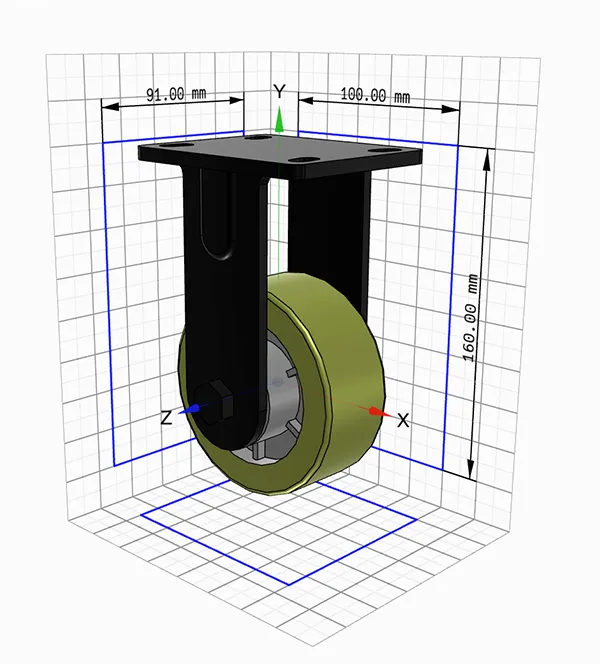
For a custom plate-mount caster, provide the overall plate dimensions together with the center-to-center bolt-hole spacing and hole diameter. If the caster must replace an existing unit, overall height and swivel clearance are also important.
Supplying a drawing or clear dimensional photograph can significantly reduce ambiguity during project evaluation.
Special Applications
A heavy duty caster may perform well under normal factory conditions but fail prematurely when exposed to repeated shock, excessive heat, moisture, debris or unusual equipment geometry. For these projects, the operating environment should be reviewed before confirming materials and structure.
Larger wheel diameter, resilient tread or an application-specific damping structure may be considered when heavy equipment must cross floor joints or uneven surfaces.
Low-profile caster geometry can help maintain equipment stability where high load capacity must be achieved within a limited overall height.
Wider wheels, stronger brackets, alternative bearing systems and dual-wheel arrangements may be evaluated for machinery with unusually high concentrated loads.
Wheel material, bearing selection, lubricant and bracket construction should be reviewed when casters operate near elevated temperatures. Actual temperature and exposure time should be provided before material selection.
Machinery frames, containers and custom transport platforms may require non-standard plates, bolt patterns, attachment structures or installation clearances.
Surface treatment, bracket material and wheel construction should be matched to the level of water, cleaning chemicals or environmental exposure expected in service.
Development Strategy
Not every custom caster project needs a completely new design. In many cases, adapting an existing heavy duty caster series can provide a simpler route. The right approach depends on how different the required specifications are from an existing product.
This approach may be suitable when the basic caster structure already meets the application but several details need to change.
A more extensive custom solution may be required when the application differs substantially from available standard designs.
Project Information
The more clearly the application is described at the beginning, the easier it is to evaluate a suitable custom caster wheel. You do not need to have every parameter available, but the following information provides a useful starting point.
Include the maximum loaded weight.
If already calculated or specified.
Total positions supporting the equipment.
Existing or required diameter.
Important for load and floor contact.
Maximum or target installation height.
Plate length and width.
Center-to-center dimensions.
Required bolt or aperture size.
Include required steering arrangement.
Smooth, rough, joints, debris or obstacles.
Water, chemicals, temperature .etc.
Occasional repositioning or frequent travel.
Show mounting area and overall application.
Very useful for replacement caster projects.
Please send us as much information as possible about your custom casters.
Existing Product Platform
Before developing a fully custom caster wheel, it is often useful to review existing products. A suitable standard series can sometimes be adapted through changes to mounting dimensions, wheel materials or other specifications.
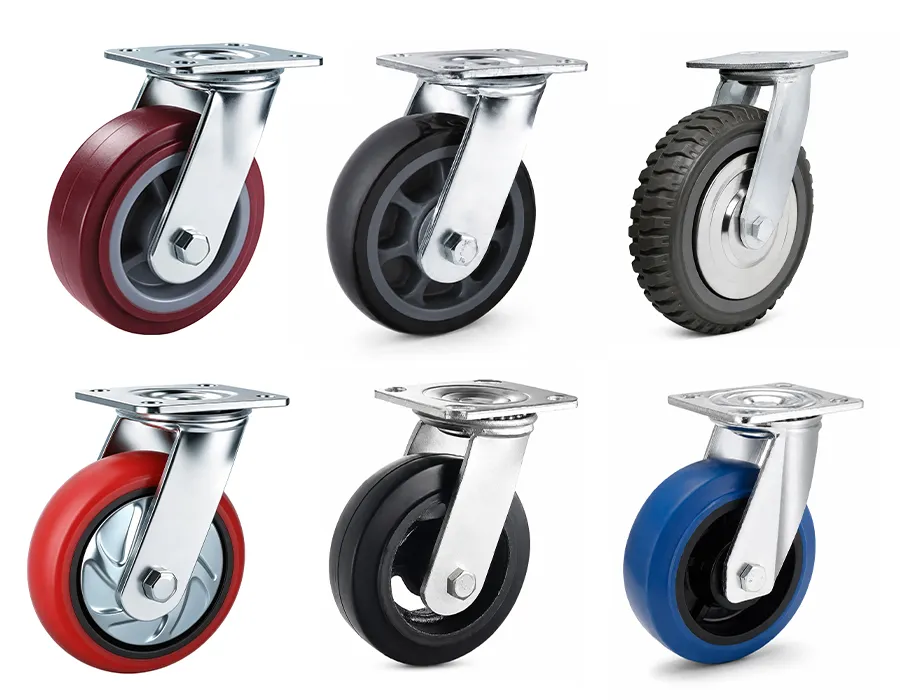
Browse the overall industrial caster range by product structure, load, material and size.
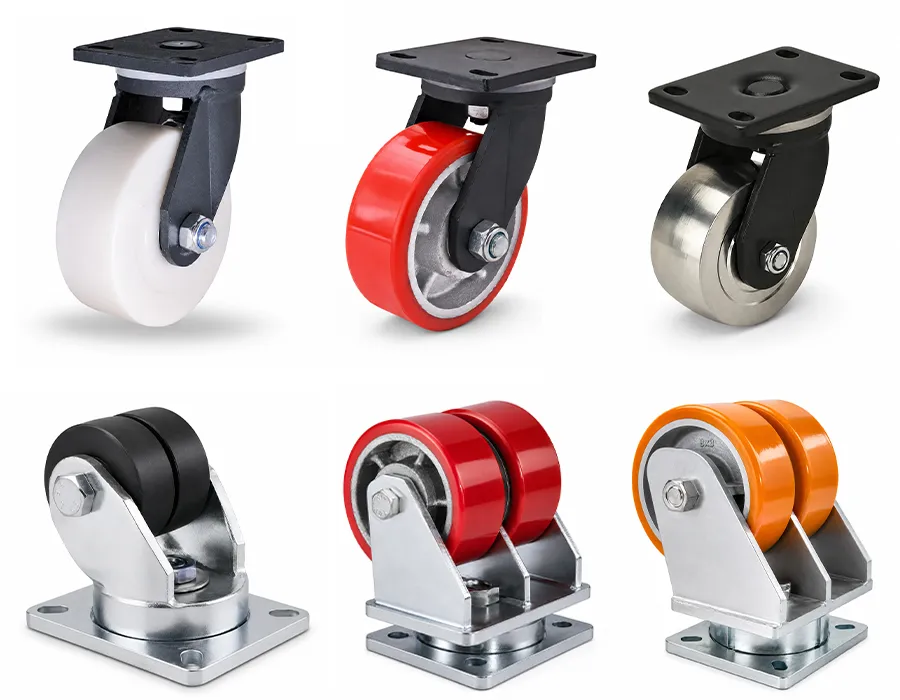
Start here for high-load machinery and applications that exceed ordinary industrial caster requirements.
Mounting plate dimensions and bolt-hole patterns can be reviewed for custom caster projects. Provide the plate length, width, center-to-center hole spacing, hole diameter and required overall mounting height so compatibility can be evaluated.
Load requirements can be evaluated as part of a custom caster project. Increasing capacity may involve changes to the wheel, wheel width, bracket, bearings, axle or overall caster structure. Total equipment weight and operating conditions should be supplied before selecting a configuration.
Drawings, photographs and physical reference samples are useful when replacing an existing industrial caster. We can first compare the specifications with current products and determine whether an existing series can be modified or a more specialized solution is required.
Wheel diameter, tread width and caster height can be reviewed according to project requirements. These dimensions influence load performance, rolling behavior, equipment clearance and swivel geometry, so they should be considered together.
Depending on the caster structure and required performance, alternative wheel materials may be evaluated. BigCaster product families include polyurethane, rubber, PA nylon, MC nylon and metal wheel solutions for different industrial conditions.
No. Many projects can begin with an existing caster structure and modify specific features such as the mounting plate, wheel material or dimensions. A fully customized design is more relevant when the equipment requirement differs substantially from existing products.
Ideally provide total equipment weight, number of casters, wheel dimensions, overall height, mounting plate dimensions, bolt-hole spacing, swivel or rigid requirements, floor condition, operating environment and expected quantity. Equipment photos and drawings are also helpful.
Our casters expert will reply to you soon.