
Explore heavy duty casters designed for industrial equipment, material handling systems, carts, machinery and other demanding mobile applications. BigCaster offers a broad selection of polyurethane, nylon, rubber and steel caster wheels with different wheel diameters, mounting configurations and load capacities.
Use this page to compare heavy duty caster wheel materials, load ranges, sizes and application requirements before selecting a suitable caster series for your equipment.
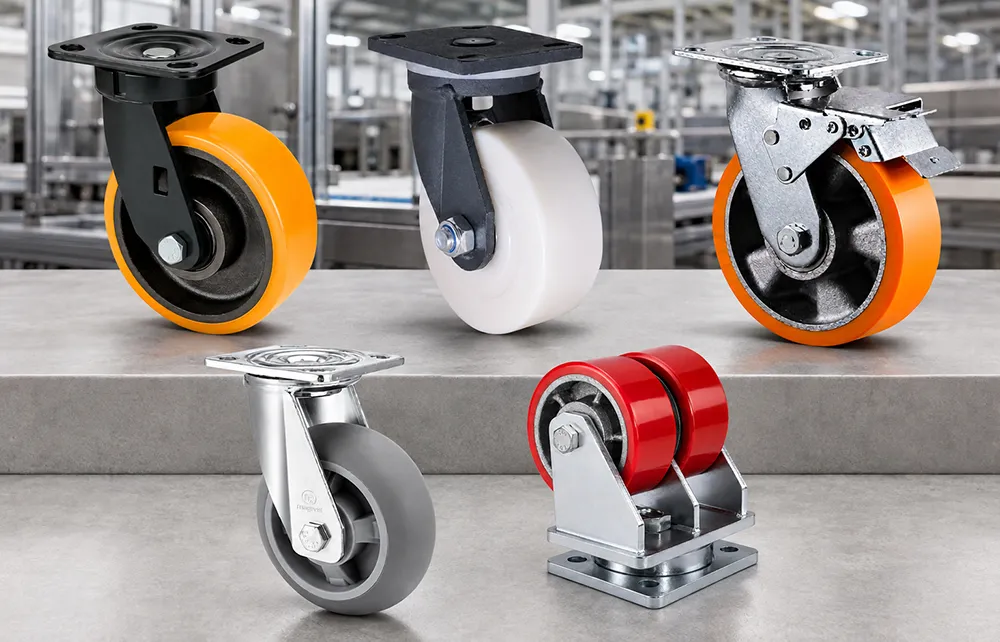
Start with the caster structure when your equipment has a specific load, height or operating requirement. BigCaster product categories include standard heavy duty caster wheels as well as more specialized designs for concentrated loads and industrial handling tasks.
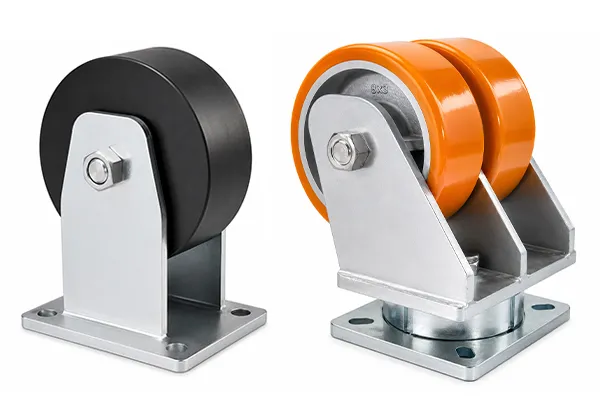
Designed for machinery, transport platforms and industrial equipment where ordinary heavy duty casters do not provide sufficient load capacity.
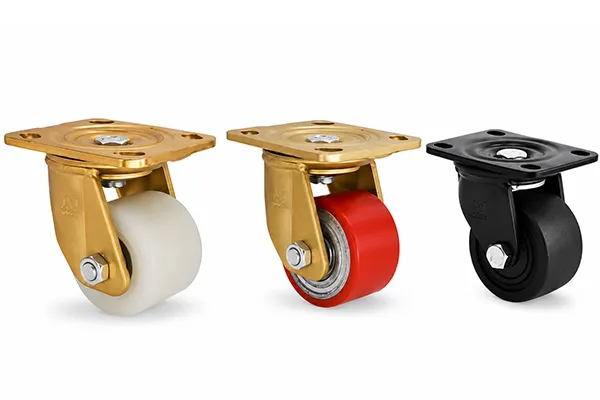
A practical option for equipment requiring high load capacity while keeping the overall mounting height and center of gravity relatively low.
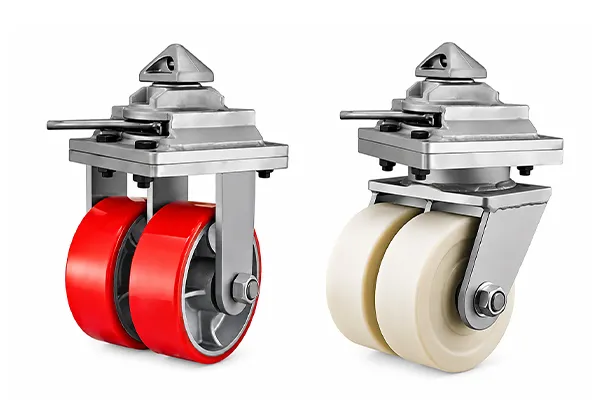
Caster solutions for container movement and related industrial material handling applications where robust wheel and bracket construction is required.
Wheel material affects rolling resistance, floor protection, noise, impact behavior and load performance. Selecting the right heavy duty caster wheel material is therefore just as important as selecting its nominal load rating.
Heavy duty polyurethane casters provide a useful balance between load capacity, wear resistance and floor protection. PU wheels are frequently selected for industrial carts, equipment and material handling systems.
Heavy duty nylon casters offer a hard rolling surface, relatively low rolling resistance and strong load performance on suitable smooth industrial floors.
Heavy duty rubber caster wheels can provide quieter operation, improved grip and better absorption of minor floor vibration compared with hard wheel materials.
Heavy duty steel caster wheels are designed for demanding industrial conditions where very high concentrated loads are more important than low noise or floor cushioning.
When comparing industrial caster wheels, begin with the required load capacity of the equipment. The load categories below provide a faster way to find products suitable for different weight ranges. Published load ratings on these category pages refer to the rated capacity of an individual caster where applicable.
When comparing industrial caster wheels, begin with the required load capacity of the equipment. The load categories below provide a faster way to find products suitable for different weight ranges. Published load ratings on these category pages refer to the rated capacity of an individual caster where applicable.
The following comparison provides a starting point for narrowing your caster selection. Final caster choice should also consider total equipment weight, number of casters, mounting dimensions, operating speed, floor condition and environmental factors.
| Requirement | Recommended Direction | Why It May Be Suitable |
|---|---|---|
| Floor protection | Polyurethane casters | PU provides a resilient tread while still supporting substantial industrial loads. |
| Lower rolling resistance | Nylon or MC nylon | Hard wheel materials roll efficiently on suitable smooth and hard floors. |
| Reduced noise and vibration | Rubber caster wheels | Resilient rubber helps absorb minor vibration and generates less rolling noise. |
| Very high concentrated load | Extra heavy duty casters | Larger brackets, stronger wheel structures and dual-wheel configurations can support demanding loads. |
| Low installation height | Low profile casters | Designed to keep equipment closer to the floor while maintaining useful load capacity. |
| Severe high-load industrial use | Steel caster wheels | Steel wheels are suited to environments where extreme load performance is the main priority. |
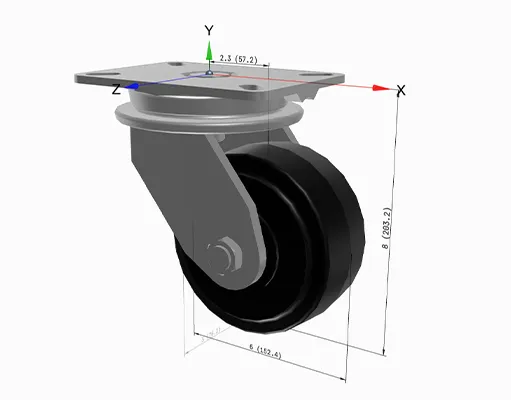
Choosing heavy duty casters involves more than matching a single load number. Wheel material, diameter, mounting style, floor conditions and the way the equipment moves can all influence caster performance.
Begin with the fully loaded weight of the machine, trolley or platform rather than its empty weight. In real industrial use, a floor may not be perfectly level, so the load may not always be distributed equally across every wheel. Selecting a caster with additional capacity provides a more practical margin for uneven loading, impact and changing operating conditions.
Polyurethane is widely used when load performance and floor protection both matter. Nylon and MC nylon are harder and often selected for high loads and efficient rolling. Rubber improves cushioning and noise performance, while steel is better reserved for especially demanding high-load conditions.
Larger caster wheels generally pass over floor joints, thresholds and small obstacles more easily than smaller wheels. They may also reduce the effort required to move heavy equipment. However, a larger wheel also increases overall caster height, so available equipment clearance should be checked before selecting the diameter.
Heavy duty swivel casters provide directional movement, while rigid casters travel along a fixed path. Many industrial carts use a combination of swivel and rigid casters to balance maneuverability with directional stability. Equipment geometry and operator movement patterns should be considered before deciding the final caster arrangement.
Two casters with the same wheel diameter may use different plate sizes, hole spacing and overall heights. When replacing an existing industrial caster, compare the mounting plate, bolt-hole pattern and installation height before ordering.
Heavy duty industrial casters can be affected by impact, floor debris, water, oil, chemicals, heat and continuous movement. These factors should be considered together rather than selecting a wheel only according to its static load rating.
Heavy duty caster wheels are used wherever industrial loads need to be moved, repositioned or supported. The correct configuration depends on the weight of the equipment, floor condition and required maneuverability.
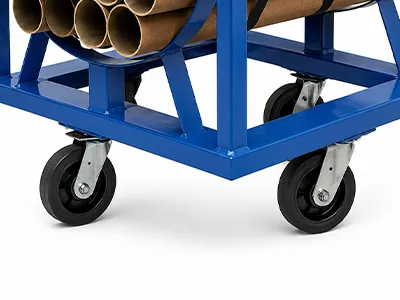
Heavy duty casters for material carts, transfer carts, workshop trolleys and mobile handling platforms.
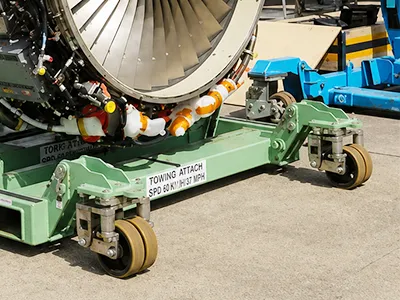
Industrial caster wheels for machines, production equipment, movable fixtures and heavy equipment bases.
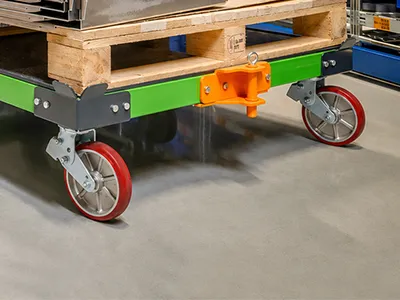
Caster solutions for warehouse transport, manufacturing lines and movement of heavy components.
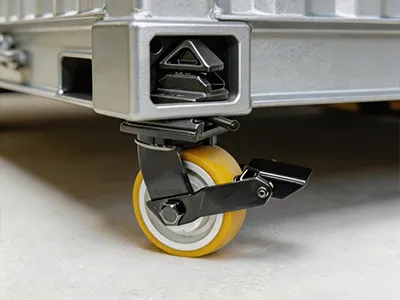
High-load caster configurations for moving containers and related industrial transport structures.
If a standard caster does not match your required load, wheel diameter, mounting plate or operating conditions, send us your equipment specifications. BigCaster can help identify a suitable existing caster series or discuss a customized configuration.
BigCaster offers industrial caster products covering a broad range of load capacities, from standard heavy duty applications to extra heavy duty caster configurations rated for several thousand pounds per caster. You can browse products by load range using the load-capacity links on this page.
Current product groups include common wheel diameters such as 3, 4, 5, 6, 8, 10 and 12 inches. Available sizes vary by caster series, wheel material and load requirement.
Polyurethane caster wheels are often preferred when floor protection, wear resistance and relatively quieter rolling are important. Nylon casters have a harder tread and can provide low rolling resistance and strong load performance on suitable hard floors. The best option depends on the floor and application.
Dual-wheel designs are commonly considered when equipment has very high load requirements or when load needs to be distributed across two wheels within one caster assembly. They are frequently used in extra heavy duty industrial applications.
Many heavy duty caster series can be configured for swivel or rigid mounting depending on the product design. A combination of swivel and rigid casters is commonly used on industrial carts that require both maneuverability and directional stability.
Check the existing wheel diameter, wheel width, overall mounting height, plate dimensions, bolt-hole spacing, wheel material and required load capacity. Matching these parameters is more reliable than selecting a replacement only by wheel diameter.
Our casters expert will reply to you soon.